Polyethylene Glycol Oleate (PEG Oleate) is a non-ionic surfactant synthesized through the etherification of polyethylene glycol (PEG) with oleyl or dioctyl alcohols. Depending on the molecular weight of PEG used, the resulting compounds—such as PEG400MO, PEG400DO, PEG600MO, and PEG600DO—exhibit distinct hydrophilic-lipophilic balance (HLB) and solubility properties. PEG400-based derivatives provide excellent fluidity and solubility, while PEG600 derivatives enhance water solubility and emulsion stability. This structural versatility allows PEG Oleate to function effectively in both oil-in-water and water-in-oil formulations.
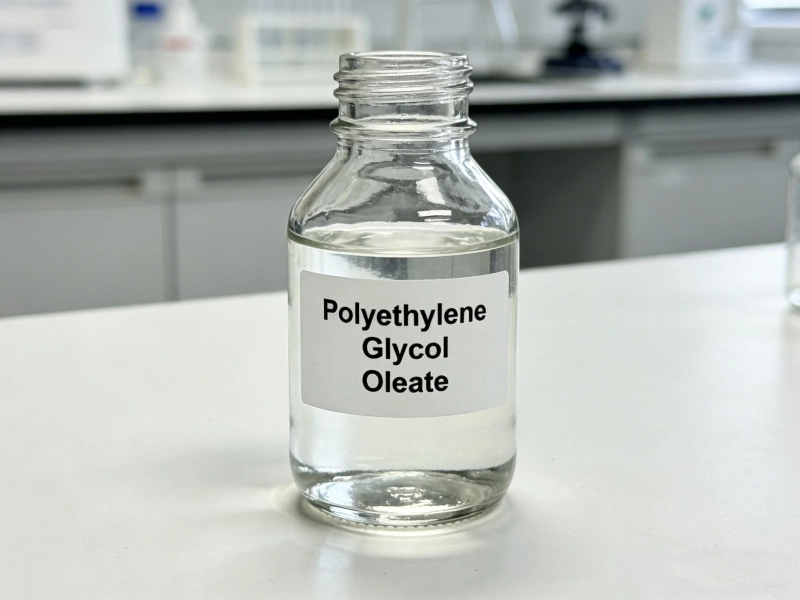
As an emulsifier and dispersant, PEG Oleate enables uniform mixing of water and oil phases in various products. Monoalcohol derivatives (MO series) primarily improve emulsification and wetting, while dioleyl/dioctyl derivatives (DO series) focus on softening, defoaming, and stabilization. In industrial applications, PEG Oleate reduces surface tension, facilitates smooth viscosity in plastisol and metalworking fluids, and enhances compatibility between organic solvents and aqueous systems. Its non-ionic nature ensures minimal interference with ionic ingredients, providing reliable performance across cosmetic, pharmaceutical, and textile formulations.
PEG Oleate is widely used in cosmetics as an O/W emulsifier, offering non-greasy texture and uniform dispersal of active ingredients. In pharmaceuticals, it serves as a solubilizer and stabilizer for drug delivery systems. Industrially, PEG Oleate finds applications as a lubricant in metalworking, a softener in textiles, and an emulsifying agent for pesticides. It also contributes to environmental sustainability as a biodegradable additive, compatible with water-based and oil-based systems.
PEG Oleate enhances product stability, texture, and performance. In skincare, it ensures smooth spreading and skin hydration without leaving residue. In textiles and polymers, it prevents clumping and improves surface finish. Its ability to lower freezing points, resist oxidation, and maintain emulsion consistency makes it a preferred ingredient in high-end formulations, ranging from luxury cosmetics to industrial coatings. Additionally, its dual functionality as a softener and dispersant reduces the need for multiple additives, streamlining production processes.
Polyethylene Glycol Oleate is considered non-toxic, non-flammable, and safe for use in personal care, food-grade, and industrial applications. It complies with general chemical storage regulations and can be transported as non-hazardous goods. Proper storage in a dry, ventilated environment ensures product stability for up to two years. Due to its mild, non-irritating nature, PEG Oleate is widely accepted in formulations requiring stringent safety and regulatory compliance, reaffirming its reliability for high-quality industrial and consumer products.